Top 10 Graphic Novels / Collected Editions Of 2013: #5 Through 1

5. Saga Volume 2 by Brian K. Vaughn (Image)
Judging by the chatter I have overheard in bookstores, everyone and their mother is reading Saga. Having been heavily into comics now for going on half a decade, Brian K. Vaughn is a big name in the medium. A name that is transcending comics and billowing through to the mainstream. As such, Saga is well on it's way to being the next Walking Dead. The simplest way to describe it would be Star Wars meets Romeo & Juliet with heavy adult themes. Very heavy. So much so that there are occasions where the vulgarity and adult content eclipses what is essentially a beautiful love story about two beings from opposite cultures. Saga uses it's unique fantasy setting to tell a very universally relatable story about forbidden love and romance amongst the backdrop of interstellar war. If you have heard a friend mention it, it is because Saga is that good.

4. Before Watchmen: Minutemen / Silk Spectre by Darwyn Cooke (DC)
This is the other of the two Before Watchmen volumes I have read thus far. Users seem to be fairly down on the remaining two, causing me to have pause. Here, Darwyn Cooke bakes these two arcs of the much-debated event with a lot of love and attention to detail. He approaches the series with the utmost respect for the source material while adding his own standout trademarks, especially with the Minutemen arc. Featuring both his writing and his artwork, Minutemen is essentially the back story of the original masked heroes that reigned during the second World War as seen through Nite Owl I's eyes as he completes Under The Hood. The artwork sings in a way that fans of Cooke already know and love. It has a classic cartoon feel without feeling immature. His use of light and shadow creates a sense of lost innocence that really makes the entire piece daring and effective. Of the four arcs I've thus far completed, Minutemen is the pinnacle. This is not to knock the Silk Spectre arc. This arc follows a teenage Lauri as she wrestles with her famous mother's identity and wanting to carve out her own. Like any rebellious teenager, she defies conventional parental wisdom and gets herself into a life of youthful mayhem during the sexual revolution of the Vietnam era. We get to know a more complex version of Lauri than the original book and film conveys. Once more, Darwyn Cooke crafted a multi-layered character persona onto what felt like somewhat of a soap opera cutout at times. Having this backstory can give the reader a new sense of appreciation for Lauri when returning to the source material. Overall, this is the place to start when diving into Before Watchmen.
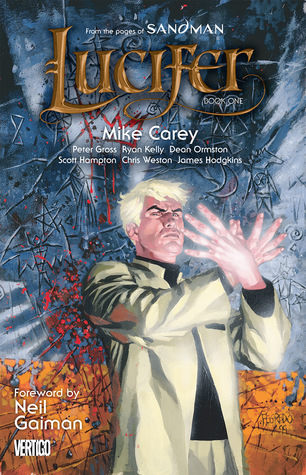
3. Lucifer Volume 1 by Mike Carey (Vertigo)
I do believe that amongst comic fanatics and casual readers alike, I might be the Robert Neville in terms of not having read Sandman. It is a series that is universally loved and I do plan to dive in. That said, I have sampled some of the frayed edges of Sandman. Not enough to be any sort of an expert on the spinoffs, but I can safely refer to Lucifer as a triumph. So much so that I am stunned that it is not more heralded. After his retirement as the lord of the underworld, Lucifer Morningstar relocates to Los Angeles to open a piano bar. Right away, Los Angeles serves as a perfect backdrop, being both the "city of angels" and what some refer to as a "land of decadence". As opposed to one massive arc, Lucifer is a collection of separate tales spanning the globe that connect through a variety of fabric that binds it all together. As such, it operates on a number of levels. I recently acquired Volume 2 with no doubt about Volume 3 later in 2014.
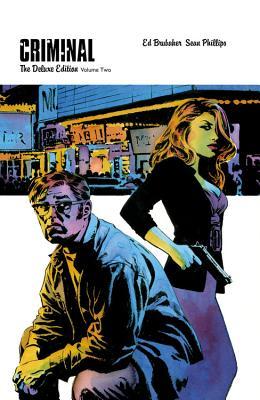
2. Criminal Volume 2 by Ed Brubaker (Icon)
In the world of noir comics, there is Ed Brubaker and then there are others, good as they may be, that are chasing Ed Brubaker. One may contend that Frank Miller, Warren Ellis, this writer and so on paved the way. They would have a point. Still, in my opinion, Ed Brubaker wrote Criminal as if to be writing a classic crime novel. These final three tales set in this universe are steeply grounded in reality despite their obvious comic book details. In the first arc, a cartoonist becomes entangled in the web of a dangerously beautiful woman while being advised by his own Dick Tracy-style creation. It is a treat for the reader to watch this otherwise quiet man be pulled apart at the seams by lust and his own mania. The middle story is a more straight-forward crime tale that calls into question religion and its relationship to medieval revenge. The final story, The Last Of The Innocent, sets a new benchmark for noir comics. On the surface, this is another tale of adultery and murder. However, this time, the team of Brubaker and artist extraordinaire Sean Phillips use the juxtaposition of the gritty Criminal world with flashbacks to a Riverdale-esque series of panels recalling the character's youth and innocence. However, even in these childish pastel colored panels, the grit and grime of Criminal fails to evade what should have been memories of sunnier days. If anyone has ever spoken to me on the subject of graphic novels and comic books, they would be well aware of my unabashed love of the collaborations between Ed Brubaker and Sean Phillips.

1. My Friend Dahmer by Derf Backderf (Abrams)
I am not big on the phenomenon of reading about serial killers. While I am a huge fan of crime films and books, the mere knowledge of grisly murder in the real world is more than enough for me. I don't want to know about the inner workings of a sadistic person who murdered for mere pleasure. I sometimes question whether or not other people take interest in such things as an attempt to look within themselves. Or is it just morbid curiosity? I wonder this because it was mere curiosity that brought me to My Friend Dahmer. I had read a blurb about this book on a comic book site about two years ago. Until that point, I had never heard of anyone else attempt to tell such a story in the medium. Comic books are littered with stories of murder, mayhem, depravity and more. Generally speaking, the people in these adult-oriented titles are pure fiction. However, one has to at least assume that these characters of fiction are at least informed by some real-life counterpart in perhaps the smallest of ways. So when it comes to My Friend Dahmer, the creator takes the leap by taking a person who is one of the 20th century's most infamous murderer's and redraws him as a seemingly harmless caricature. As you flip from one page to the next, you become acutely aware that no amount of pen & ink can attempt to make Jeffrey Dahmer at any age feel human. There is an obvious caste system at play here. Jeffrey Dahmer was on the fringes of the outcasts. At the point you come to meet a young Jeffrey Dahmer, he is already in high school. There is no concrete way in which to determine if the circumstances made Dahmer or if Dahmer was always dead behind the eyes. There are moments were you get the sense that buried deep within his person, there was a human being inside fighting desperately to get out. Jeffrey Dahmer was a tragic character in every sense of the word. At the same time, from the point we are introduced to him, he was already well on his way to a life filled with darkness and horror. There is really no way to humanize Jeffrey Dahmer and I honestly do not believe Derf Backderf was seeking to do so. He does offer the reader an unvarnished glimpse into a time and place that only an outside observer close to the devil could provide. Someday, this will be mentioned as a landmark in the medium.


Comments
Post a Comment