That Would Be Hell With Three L's
...I'm pretty certain that I launched a complaint of this nature very recently. I get bored and come down with cabin fever on a near daily basis. My routine for curbing this is not what one might refer to as dynamic, but it suits me well enough. I basically live inside a spin cycle of my own creation upon which I leave to go look at and occasionally buy books. I spend hours staring at the same titles over and over, examining each book that draws my initial intrigue for any physical imperfection I can find. When I buy a new book, I want the newest looking one on the shelf. (If you were to accuse me of having OCD, you would be correct).
Sometimes, I find just the right bound edition of something...anything. I purchase it and I bring it home. As a result, my stack of unread books never gets any smaller. I read a lot, but not at the pace warranted to match my desire to buy more books. So, rather than remain at home reading, I waste my afternoons looking for more books in the spin cycle that is my current fixation and/or hobby.
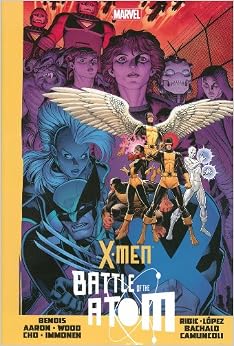 Naturally, this was precisely what I was doing this morning. I currently wield a 15% OFF digital coupon that is eating a hole in me and one of the latest X-Men hardcover editions was luring me. From a guesstimation standpoint, I would say a crisp 240 pages sounded about right. However, Marvel has come up with a seemingly new price structure since being purchased by Disney. Marvel and DC already lead the charge in asking top dollar for their products. Not to be outdone, Marvel is going for three from full court. The X-Men hardcover in question? $50.
I realize that comics in collected editions are on the rise and the creative talent pool is wider and deeper than ever. Whether you fancy mainstream superhero tales, adaptations, eery melodrama or quirky weirdness, the industry has a wide swath for wide readership. Still, I have a hard time believing that Marvel can continue to dominate on all fronts by not only narrowing focus onto strictly superheroes, but also gouging a consumer base with less spending money than before. I would like to get more acquainted with the yarns of the X-Men, Daredevil, Deadpool and Gambit. I just didn't realize that you needed to be Mitt Romney to do it.
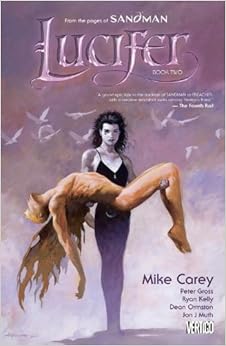 ...while on the topic of comics from the Big Two, DC is doing the exact opposite of Marvel and flooding their Vertigo imprint with talent. Albeit a fairly old title, Mike Carey's Lucifer did not seem to garner the fanfare that it should have seeing as though it is spun directly from the beloved Sandman series. Recently, I finished Book Two in the newly re-released series and I will heartily declare it a must read.
The title of Lucifer is highly on-the-nose and in less capable hands, the series could easily have gone for a more obvious style. Then again, having been rooted in Neil Gaiman's universe, Mike Carey had those expectations to meet. The thing that makes this collection so easy to champion is that each arc is done so it has mass appeal while not shying away from any of the aspects that make the actual character one that humanity approaches with trepidation. The traits of Lucifer Morningstar are highly influenced by Biblical characteristics, but he is also married with a heavy dose of fantasy elements and dramatic flair.
Despite being the title character and the book's dual protagonist and antagonist, Lucifer Morningstar relegates himself to mainly a background player. The stories, of which there are several running concurrently, are woven together by Lucifer's appearance or influence within. Much like Sandman's sister Death, Lucifer exists to lurk within the stories of others.
As I mentioned before, the talent pool in sequential storytelling is ocean deep today. There are so many well-written, well illustrated stories that it can be overwhelming to know where to begin. Allow me to make it a little bit easier. If you happen to see Lucifer Book One sitting on a store shelf, just buy it. You're welcome.
...pornography is not in my wheelhouse. Though I am not against it, I am just not a connoisseur. That said, as a character in her own tale, I have a bit of a fascination with Linda Lovelace. After watching the documentary Inside Deep Throat, I was curious about her story. Last night, I had the opportunity to watch the movie Lovelace.

Like any biopic, it can be difficult to tell where, if any, embellishments were made. The interesting manner in which Lovelace was made shows her story twice from two different angles. The first 45-50 minutes follows Linda Lovelace from her as a 21 year old through meeting her first husband, their initial troubles and her journey into the world of adult films. There are some imperfections to their relationship in this half of the story. Depending on one's feelings, her climb to the top of the pornography world might never be seen as glamorous. Regardless, the climax of this half of the film ends with her as a star, rubbing elbows with Hollywood's A-list.
The second half of Lovelace gets decidedly dark. Recreating the first half of her story, the viewer now sees her journey into pornography in a far grimmer fashion. Here, she is not a willing participant. Rather, her husband Chuck Traynor, played brilliantly by Peter Sarsgaard, parlayed his willingness to pimp Linda to all comers into forcing her into adult films. Spliced in between his sleazy dealings is his penchant for violence and utter disrespect for his own wife. In the back half of Lovelace, the darkness looms over her story like a storm cloud.
Sadly, if you know her story, it ended tragically with a 2002 car crash. In the film, she does get to take back her life and find redemption. But even this is not achieved without some truly heartbreaking moments. Linda Lovelace was a tragic figure made famous for something that likely ate her from the inside out. For all of the people who will throw themselves under a bus for a sliver of fame, Linda Lovelace was thrust into her own spotlight and it was never kind.
Read: The Underwater Welder by Jeff Lemire
Listen: Black Mountain Year Zero
Watch: Lovelace
Sometimes, I find just the right bound edition of something...anything. I purchase it and I bring it home. As a result, my stack of unread books never gets any smaller. I read a lot, but not at the pace warranted to match my desire to buy more books. So, rather than remain at home reading, I waste my afternoons looking for more books in the spin cycle that is my current fixation and/or hobby.
I realize that comics in collected editions are on the rise and the creative talent pool is wider and deeper than ever. Whether you fancy mainstream superhero tales, adaptations, eery melodrama or quirky weirdness, the industry has a wide swath for wide readership. Still, I have a hard time believing that Marvel can continue to dominate on all fronts by not only narrowing focus onto strictly superheroes, but also gouging a consumer base with less spending money than before. I would like to get more acquainted with the yarns of the X-Men, Daredevil, Deadpool and Gambit. I just didn't realize that you needed to be Mitt Romney to do it.
The title of Lucifer is highly on-the-nose and in less capable hands, the series could easily have gone for a more obvious style. Then again, having been rooted in Neil Gaiman's universe, Mike Carey had those expectations to meet. The thing that makes this collection so easy to champion is that each arc is done so it has mass appeal while not shying away from any of the aspects that make the actual character one that humanity approaches with trepidation. The traits of Lucifer Morningstar are highly influenced by Biblical characteristics, but he is also married with a heavy dose of fantasy elements and dramatic flair.
Despite being the title character and the book's dual protagonist and antagonist, Lucifer Morningstar relegates himself to mainly a background player. The stories, of which there are several running concurrently, are woven together by Lucifer's appearance or influence within. Much like Sandman's sister Death, Lucifer exists to lurk within the stories of others.
As I mentioned before, the talent pool in sequential storytelling is ocean deep today. There are so many well-written, well illustrated stories that it can be overwhelming to know where to begin. Allow me to make it a little bit easier. If you happen to see Lucifer Book One sitting on a store shelf, just buy it. You're welcome.
...pornography is not in my wheelhouse. Though I am not against it, I am just not a connoisseur. That said, as a character in her own tale, I have a bit of a fascination with Linda Lovelace. After watching the documentary Inside Deep Throat, I was curious about her story. Last night, I had the opportunity to watch the movie Lovelace.
Like any biopic, it can be difficult to tell where, if any, embellishments were made. The interesting manner in which Lovelace was made shows her story twice from two different angles. The first 45-50 minutes follows Linda Lovelace from her as a 21 year old through meeting her first husband, their initial troubles and her journey into the world of adult films. There are some imperfections to their relationship in this half of the story. Depending on one's feelings, her climb to the top of the pornography world might never be seen as glamorous. Regardless, the climax of this half of the film ends with her as a star, rubbing elbows with Hollywood's A-list.
The second half of Lovelace gets decidedly dark. Recreating the first half of her story, the viewer now sees her journey into pornography in a far grimmer fashion. Here, she is not a willing participant. Rather, her husband Chuck Traynor, played brilliantly by Peter Sarsgaard, parlayed his willingness to pimp Linda to all comers into forcing her into adult films. Spliced in between his sleazy dealings is his penchant for violence and utter disrespect for his own wife. In the back half of Lovelace, the darkness looms over her story like a storm cloud.
Sadly, if you know her story, it ended tragically with a 2002 car crash. In the film, she does get to take back her life and find redemption. But even this is not achieved without some truly heartbreaking moments. Linda Lovelace was a tragic figure made famous for something that likely ate her from the inside out. For all of the people who will throw themselves under a bus for a sliver of fame, Linda Lovelace was thrust into her own spotlight and it was never kind.
Read: The Underwater Welder by Jeff Lemire
Listen: Black Mountain Year Zero
Watch: Lovelace
Comments
Post a Comment