Observations On A Nickel & Five Pennies Standing In For A Dime
On my way to work most days, I pass this strip mall that contains a series of fast food places and a smaller strip mall closer to the main drag. Right off the curb of said drag, there is a giant flapping flag that reads "Now Open" with stars & stripes within the lettering. The name of the food establishment waving said flag is Pita Wrap: Mediterranean & American Cuisine. If your peer through their front window, you can see the giant Coca Cola refrigerator. Having not entered said establishment as of writing, I wonder if their menu consists of falaffel, tabbouleh, hummus and hot dogs. Maybe while standing in line, you may even be treated to an occasional sitar solo sandwiched in between Kid Rock and Bruce Springsteen. America is such a weird place.
Another absurdity I have noticed recently was a bumper sticker on a parked car around the corner. The bumper sticker read "I'd Rather Be Right Than A Liberal". Aside from any personal misgivings I have about the statement, it is a thought that makes me wish I could converse with the owner. Being more of a pessimistic eye-roller, I tend to view things of that nature as mostly opinion on both sides of the argument. Moreover, what exactly is this person claiming to be "right" about? Is this person stating that he or she is proudly right wing? Or, are they expressing that the opinions they hold are always correct?
 The notion expressed by this parked vehicle seems to have some loose ties to a book I'm in the middle of currently. In Jeff Sharlett's The Family: The Secret Fundamentalism at the Heart of American Power, the author talks about the history of fundamentalism in politics and society. Naturally, reaction lends itself to pointing a finger at those who call themselves "right wing". However, as I delve ever further into this book, I'm starting to find that elite fundamentalism is far different than that which is mocked in the Bible Belt. It seems more that the regular people who are "cookoo for Christ" are merely a easily targeted distraction. The fundamentalists talked about in The Family don't see Christ as a savior. From my interpretation, the elite see Christ as more of a metaphor for power, control and excessive wealth. It is a seriously fascinating look at the ties between elite power and their quest for dominance.
In the past year or so, I've become more and more fascinated by religion. However, this fascination is not in the spiritual sense. For all intent and purpose, I am an atheist. Still, the many and expanding facets that religious worship takes shape within has me wanting to know more. As I get older, I am seeing religion as more than just an imagined relationship between man and a supernatural being. I am also learning and wanting to learn about the myriad of ways in which it guides people and nations. One of the ways I aim to understand these things is to learn more about my own lack of belief.
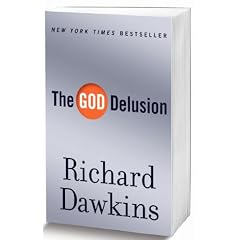 In addition to Jeff Sharlett's book, I am currently in the midst of Sir Richard Dawkins' The God Delusion. As the title suggests, Dawkins aims to prove beyond any speculation the likelihood that a supreme being cannot exist. In his book, he suggests that in some form or fashion, everyone is an atheist of some sort. Like all scientists worth their namesake, Richard Dawkins has devised a chart for levels of atheism. It reads as follows:
So, while the concepts of religion, political hyperbole and the mesh of Middle Eastern and American cultures seems (and likely is) unrelated, think of this entry as more my rambling view on general absurdity. As I try to stay aware of the world around me on a daily basis, I seem to stumble upon things I find awkward more and more.
P.S. On a completely unrelated note, Colors by Between The Buried And Me is still a way rad tech-metal masterwork.
Another absurdity I have noticed recently was a bumper sticker on a parked car around the corner. The bumper sticker read "I'd Rather Be Right Than A Liberal". Aside from any personal misgivings I have about the statement, it is a thought that makes me wish I could converse with the owner. Being more of a pessimistic eye-roller, I tend to view things of that nature as mostly opinion on both sides of the argument. Moreover, what exactly is this person claiming to be "right" about? Is this person stating that he or she is proudly right wing? Or, are they expressing that the opinions they hold are always correct?
The notion expressed by this parked vehicle seems to have some loose ties to a book I'm in the middle of currently. In Jeff Sharlett's The Family: The Secret Fundamentalism at the Heart of American Power, the author talks about the history of fundamentalism in politics and society. Naturally, reaction lends itself to pointing a finger at those who call themselves "right wing". However, as I delve ever further into this book, I'm starting to find that elite fundamentalism is far different than that which is mocked in the Bible Belt. It seems more that the regular people who are "cookoo for Christ" are merely a easily targeted distraction. The fundamentalists talked about in The Family don't see Christ as a savior. From my interpretation, the elite see Christ as more of a metaphor for power, control and excessive wealth. It is a seriously fascinating look at the ties between elite power and their quest for dominance.In the past year or so, I've become more and more fascinated by religion. However, this fascination is not in the spiritual sense. For all intent and purpose, I am an atheist. Still, the many and expanding facets that religious worship takes shape within has me wanting to know more. As I get older, I am seeing religion as more than just an imagined relationship between man and a supernatural being. I am also learning and wanting to learn about the myriad of ways in which it guides people and nations. One of the ways I aim to understand these things is to learn more about my own lack of belief.
In addition to Jeff Sharlett's book, I am currently in the midst of Sir Richard Dawkins' The God Delusion. As the title suggests, Dawkins aims to prove beyond any speculation the likelihood that a supreme being cannot exist. In his book, he suggests that in some form or fashion, everyone is an atheist of some sort. Like all scientists worth their namesake, Richard Dawkins has devised a chart for levels of atheism. It reads as follows:- Strong Theist: 100% probability of God. In the words of C.G. Jung, "I do not believe. I know."
- De Facto Theist: Very high probability, but short of 100%. "I cannot know for certain, but I strongly believe in God and live my life on the assumption that he is there."
- Technically Agnostic, Leaning Towards Theism: Higher than 50%, but not very high. "I am uncertain, but I am inclined to believe in God."
- Completely Impartial Agnostic: Exactly 50%. "God's existence and non-existence are exactly equiprobable."
- Technically Agnostic, Leaning Towards Atheism: Lower than 50%, but not very low. "I don't know whether God exists, but I'm inclined towards skepticism."
- De Facto Atheist: Very low probability, but short of zero. "I cannot know for certain, but I think God is very improbable and I live my life on the assumption that he is not there."
- Strong Atheist: "I know there is no God, with the same conviction as Jung 'knows' there is one."
So, while the concepts of religion, political hyperbole and the mesh of Middle Eastern and American cultures seems (and likely is) unrelated, think of this entry as more my rambling view on general absurdity. As I try to stay aware of the world around me on a daily basis, I seem to stumble upon things I find awkward more and more.
P.S. On a completely unrelated note, Colors by Between The Buried And Me is still a way rad tech-metal masterwork.


Comments
Post a Comment